
Payment Agreement
How to Secure Fair Terms and Direct Cash Flow
Introduction
Imagine finishing a large project only to realize the client has no clear deadline to pay you. This scenario happens to thousands of business owners every day. In fact, late payments cause nearly 80 percent of small business failures. A solid payment agreement protects your hard work and secures your financial future.
You will learn how to draft clear terms and use professional tools to manage your cash. Contract Corridor helps teams automate these documents to ensure they never miss a detail. This guide covers everything from simple letters to complex installments. By the end, you will know how to create a payment agreement contract that holds up under scrutiny.
Quick Answer Summary
A payment agreement is a legally binding document that outlines how one party will pay another for goods or services. It specifies the total amount owed, the due dates, and the accepted payment methods. These documents prevent disputes by setting clear expectations for both the debtor and the creditor. Most businesses use a template payment agreement to ensure they include all legal protections and interest clauses.
What Is Payment Agreement?
A payment agreement represents a formal contract where a debtor promises to pay a creditor a specific amount of money under agreed conditions. The word "agreement" comes from the Old French "agrement," which means to satisfy or make peace. In the world of business, it acts as a peacekeeper that prevents legal battles.
Specifically, this document sits at the heart of contract management. It transitions a verbal promise into a legal reality. You might see it called a money agreement contract or a contract to pay. Regardless of the name, it serves one purpose. It defines the "who, what, when, and how" of a financial transaction. Without it, you lack a paper trail to prove someone owes you money.
Modern companies use a contract for payment agreement to track their accounts receivable. It fits within a broader strategy of risk management. Therefore, it is not just a piece of paper. It is a vital tool for maintaining a healthy balance sheet.
Why It Matters
Getting your payment terms right dictates whether your business thrives or dies. A vague promise to pay often leads to months of chasing invoices. This wastes time, money, and emotional energy. Furthermore, clear contracts improve professional relationships by removing any guesswork.
The Impact of Clear Payment Terms
- Businesses with written terms get paid 2.5 times faster than those without them.
- Legal costs for recovering debt without a contract can exceed the original debt amount by 50 percent.
- Automated tracking can reduce administrative errors by nearly 40 percent.
From a legal angle, an agreement between two parties provides evidence for court. If a client refuses to pay, a judge looks at your documentation first. A well-written payment agreement letter between two parties acts as your primary defense. It proves the debt exists and shows the person agreed to the terms.
Key Components & Elements
Every effective contract needs a few basic ingredients to be enforceable. If you miss these, a court might find your document invalid. Use this list as you review a payment agreement sample letter or create your own.
- Identifying Information: You must list the legal names and addresses of everyone involved in the contract.
- Total Debt Amount: State the exact figure in both words and numbers to avoid any confusion.
- Payment Schedule: Define if the person will pay all at once or through a payment plan agreement contract.
- Interest Rates: Specify if you will charge interest on the principal amount or for late payments.
- Payment Method: List how you want to receive funds, such as wire transfer, check, or digital payment.
- Late Fees: Describe the penalties that apply if the debtor misses a deadline.
- Governing Law: Mention which state's laws will apply if a legal dispute happens.
- Signatures: The document must have dates and signatures from all parties to become official.
Types & Categories
Not every financial situation is the same. Therefore, different scenarios require different formats. Use the table below to choose the right approach for your needs.
| Type | Description | Best For | Key Consideration |
|---|---|---|---|
| Lump Sum | One single payment on a set date. | Simple sales of goods. | No recurring tracking needed. |
| Installment Plan | Multiple smaller payments over time. | High-cost services or cars. | Needs a payment plan template contract. |
| Promissory Note | A formal promise to repay a loan. | Personal loans between people. | Usually focuses on interest. |
| Service Agreement | Linked to specific work milestones. | Construction or tech projects. | Payments depend on approval. |
For example, a payment agreement contract for car sales usually includes a lien. This allows the seller to take the car back if the buyer fails to pay. On the other hand, a personal payment agreement letter might be much simpler.
Standardized Payment Forms and Templates
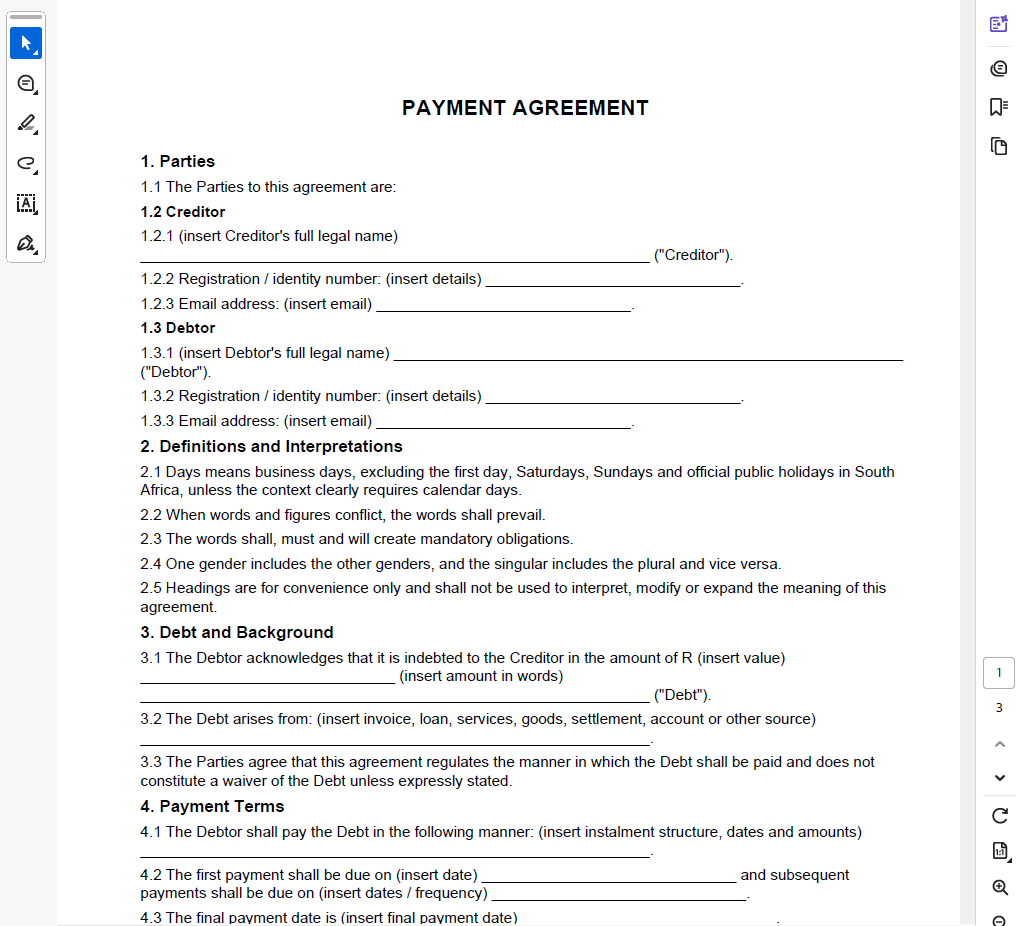
Using a standardized payment agreement form ensures that all parties understand their financial obligations. A payment agreement contract template provides a reliable structure for outlining debt totals and due dates. This payment agreement format serves as the foundation for a legally binding document that protects the interests of both the creditor and the debtor.
For individuals or small businesses, a simple payment agreement template is often sufficient to document a clear path to resolution. You can customize a contract template for payment agreement to include specific clauses regarding interest or late fees. A well-drafted payment agreement pdf can be easily shared and signed digitally to speed up the approval process.
Crafting an Agreement to Pay Letter
An agreement to pay letter acts as a formal acknowledgment of a debt. When you draft a sample agreement to pay letter, you should include the total amount owed and the proposed schedule for reimbursement. This letter of agreement for payment creates a paper trail that is essential if legal disputes arise later. Many people use a sample agreement letter of payment to ensure they do not miss critical details like contact information and dates.
A formal letter of agreement to pay should be professional and concise. Using a pay agreement letter helps maintain a positive relationship between two parties by establishing transparency. You can find a free sample payment agreement online to help you structure the opening and closing statements of your document. A sample payment agreement letter between two parties often includes a space for both signatures to confirm mutual consent.
Specialized Contracts for Money Owed
A contract for money owed is a specific type of legal document used when one person or business needs to repay a significant sum. This money owed contract agreement outlines the consequences of missed payments and the total duration of the debt. If you are dealing with a personal loan, a simple payment agreement between two parties can keep the terms clear without unnecessary complexity. A promise of payment contract serves as a formal guarantee that the funds will be delivered as promised.
When drafting a contract of agreement to pay, it is vital to define the exact currency and method of transfer. A promise to pay contract template can be adapted for various scenarios, such as buying a vehicle or settling a service fee. Using a payment agreement contract sample allows you to see how other professionals handle collateral or default clauses. An agreement to pay back money is more than just a verbal handshake; it is a vital tool for financial risk management.
Managing Repayment Plans and Schedules
A repayment plan agreement is necessary when a debtor cannot pay the full amount upfront. Using a repayment plan agreement template allows you to break down a large debt into manageable monthly or weekly installments. This format for payment plan should clearly state the amount of each installment and the final date for total settlement. A sample repayment contract helps you visualize the timeline for debt recovery.
To keep the process organized, businesses often use a payment arrangement template to track incoming funds. A payment plan contract agreement template ensures that every payment is recorded against the principal balance. If the debt involves interest, a sample terms of payment contract will detail how those extra costs are calculated over time. A contract for payment plan helps both parties stay accountable to the agreed schedule.
Essential Components of a Billing Contract
A billing contract serves as a bridge between service delivery and final compensation. This document often includes a payment terms and conditions template to define when invoices are sent and when they become overdue. Having a clear payment terms sample helps clients understand your expectations before work begins. Using an invoice agreement can prevent common disputes regarding hidden fees or unexpected costs.
Establishing a payment terms agreement is a proactive way to manage cash flow. You can use a sample format of agreement between two parties to standardize your billing across different clients. A contractual payment clause protects your business by stating the legal remedies available if a client refuses to pay. These payment agreements are the backbone of professional service industries.
Legal Protections in Payment Contracts
A contract of payment agreement must be legally sound to be enforceable in court. Using a payment contract sample can help you identify the necessary legal jargon and protective clauses. For instance, a payment agreement contract between two parties should specify the governing law of the jurisdiction where the contract is signed. A payment contract pdf version is often preferred for long-term storage because it cannot be easily altered.
For larger transactions, a financial agreement contract template provides comprehensive coverage of all fiscal risks. This agreement of payment form acts as a shield against claims of misunderstanding. A sample of payment agreement between two parties should clearly identify who is responsible for taxes and processing fees. A contract payment agreement form is an essential tool for any entity that regularly lends money or provides credit.
Templates for Diverse Business Needs
Whether you are a freelancer or a large corporation, having a library of templates is beneficial. A financial agreement template can be modified for various types of credit extensions. If you are selling a car, an auto payment agreement contract ensures the buyer stays on track with their monthly dues. A template for agreement of payment can be used for everything from rent arrears to professional consulting fees.
Using a payment agreement contract example allows you to model your documents after successful industry standards. A sample contract letter for payment can be sent as a follow-up to a verbal discussion to lock in the terms. Having a ready-to-use pay agreement form saves time during the onboarding process for new customers. A simple payment agreement letter is often the fastest way to get a signature and move forward with a deal.
Formalizing the Payment Process
An agreement of payment terms should be signed before any money changes hands. This document, often called a payment plan contract, protects the lender by establishing a clear legal obligation. A sample payment plan contract can show you how to structure grace periods and penalties for late arrivals. Using a template for payment plan contract ensures consistency across all your financial records.
A letter of payment agreement template is a versatile tool for small businesses that need to document debt informally but effectively. The agreement to pay contract should always include a section for dispute resolution to avoid costly litigation. By using a sample contract for payment plan, you can ensure that your business remains compliant with local lending laws. A payment agreement letter sample can be used as a template for recurring billing cycles.
Step-by-Step Implementation Guide
Follow these steps to ensure your document is legally sound. This process works whether you use a payment contract template free or write one from scratch.
- Negotiate the Terms: Talk to the other party about the total amount and the timeline. Pro tip: Always discuss late fees early to set clear expectations.
- Draft the Document: Use a simple payment contract template to organize your thoughts. Pro tip: Keep the language plain so everyone understands the rules.
- Include a Default Clause: Explain exactly what happens if the person stops paying. Pro tip: Mention that the debtor will pay your legal fees if you have to sue.
- Review and Edit: Look for typos in the payment amounts or dates. Pro tip: Have a third party read the pay agreement contract to check for clarity.
- Sign and Execute: Have both parties sign the paper in front of a notary if the amount is high. Pro tip: Send a digital copy to everyone immediately after signing.
- Set Up Reminders: Use software to alert you when a payment is due. Pro tip: Send a friendly reminder three days before the deadline.
Common Mistakes & How to Avoid Them
Many people make simple errors that cost them thousands of dollars later. Here is how to stay safe.
| Mistake | Why It Happens | How to Fix It |
|---|---|---|
| Being Too Vague | People want to avoid awkwardness. | Use specific dates and exact dollar amounts. |
| Ignoring Interest | Sellers forget the cost of waiting. | Include a fair interest rate in the contract. |
| No Signature | Parties rely on verbal trust. | Always get a signature on the final version. |
| Missing Late Fees | People assume everyone pays on time. | Define a clear penalty for every late day. |
The most important thing to remember is that a contract is only as good as its execution. Always keep a signed copy of the payment contract agreement in a secure place.
Industry Examples & Use Cases
How do these documents look in the real world? Here are three common scenarios.
Scenario 1: Freelance Web Design
A designer uses a payment agreement letter example to secure a $5,000 project. They request 50 percent upfront and 50 percent upon completion. Because they have a contract, the client pays on time to avoid the 5 percent late fee.
Scenario 2: Selling a Used Car
A person sells their car to a neighbor using a payment agreement between two people. They agree on monthly installments of $200. The seller uses a payment contract between two parties to keep the title until the last payment arrives.
Scenario 3: Corporate Consulting
A firm hires a consultant for a six-month project. They use an automatic payment agreement template to pull funds every month. This removes the need for manual invoicing and ensures the consultant gets paid like a regular employee.
Frequently Asked Questions
How do I write a payment contract?
Start by identifying the parties and the total debt amount. Then, list the schedule of payments and the consequences for missing a deadline. Finally, ensure both people sign and date the document.
Is a payment agreement letter legally binding?
Yes, as long as it contains an offer, acceptance, and something of value called consideration. Both parties must also be of sound mind and legal age to sign.
Can I use a free payment contract template?
Yes, many people use a free template for payment agreement to save time and money. However, make sure you customize the terms to fit your specific state laws and business needs.
What should I do if someone breaks the agreement?
First, send a formal letter of payment agreement between two parties to remind them of the debt. If they still do not pay, you may need to go to small claims court or hire a collection agency.
How to write a payment agreement?
To write a payment agreement, start by identifying the two parties involved and the total amount of money owed. Clearly outline the repayment schedule, including specific dates and payment methods like bank transfers or checks. You should also include a section on late fees and a signature line for both parties to make the document legally binding.
How Contract Corridor Helps
Managing dozens of sheets of paper is a recipe for disaster. Contract Corridor simplifies your workflow so you can focus on growing your business. Our platform offers a central place for every payment agreement contract pdf you ever sign.
First, our software uses smart templates to help you draft documents fast. You can quickly generate a sample payment agreement tailored to your industry. Second, we offer automated reminders for upcoming due dates. This ensures you never have to guess when your cash flow will arrive. Third, our electronic signature feature makes it easy for clients to sign from anywhere in the world.
Do not leave your income to chance. Use professional tools to ensure every agreement between two parties example you create is bulletproof. Start your journey toward better financial security today.

About the Author: Melissa Jooste
Melissa Jooste is the Head of Marketing at Contract Corridor, where she shapes the voice, narrative, and market positioning of a leading contract lifecycle management platform. Recognized for her expertise in contract lifecycle management content, Melissa is known for producing insightful, high-impact thought leadership that challenges conventional approaches to contract management. Her work goes beyond surface-level marketing, offering clear, strategic perspectives on how organizations can unlock value, reduce risk, and gain control through more effective contract lifecycle practices. Her writing is widely valued for its clarity, depth, and relevance, bridging complex legal, financial, and operational concepts into content that is both accessible and commercially meaningful. By combining strong storytelling with data-driven insight, she consistently delivers content that resonates with senior business leaders, legal professionals, and operational teams alike. Through her work, Melissa plays a key role in establishing Contract Corridor as a leading voice in the contract lifecycle management space, shaping how organizations think about contracts, not as static documents, but as dynamic drivers of business performance.
Connect on LinkedIn
About the reviewer: Jenna Kretzmer
Jenna Kretzmer, CA(SA) is an Executive at Contract Corridor, where she plays a key role in shaping the strategic direction and market positioning of a leading contract lifecycle management platform. A global executive with over a decade of experience, Jenna has led large-scale, international operations and driven growth, transformation, and market expansion across multiple regions. She is recognized for her ability to operate at the intersection of strategy, execution, and commercial performance. Jenna is a leading voice in the contract lifecycle management space, known for her perspectives on contract governance, revenue optimization, and operational efficiency. Her work challenges traditional approaches to contract management, advocating for a shift toward greater visibility, accountability, and value realization across the entire contract lifecycle. She is driving Contract Corridor to enable organizations to move beyond static contract storage toward proactive, value-led contract management, where contracts are treated not as legal documents, but as dynamic instruments that drive measurable business outcomes.
Connect on LinkedInPayment Agreement
The templates and resources available through Contract Corridor are provided for general informational purposes only. They do not constitute legal advice, and their use does not create an attorney-client relationship between you and Contract Corridor or any of its affiliates.
While every effort has been made to ensure that the templates are up to date and relevant, Contract Corridor makes no representations or warranties, express or implied, regarding their accuracy, completeness, adequacy, legality, or suitability for any specific purpose. The templates may not reflect current legal developments or the laws applicable in your jurisdiction.
You are solely responsible for reviewing, customising, and validating any template before use, to ensure that any document meets your specific needs and complies with applicable laws and regulations.
To the fullest extent permitted by law, Contract Corridor, its owners, employees, and affiliates disclaim all liability for any loss, damage, or consequence arising directly or indirectly from the use of, or reliance upon, any template, resource, or related material provided on or through this platform.
By accessing, downloading, or using any template, you acknowledge and agree that such use is entirely at your own risk.
Contract Corridor Contract Templates